Particle Size
A usable recycled asphalt product needs a consistent top size. Too much oversize slows down screening, blending and downstream handling.

Asphalt Recycling Material Guide
Asphalt millings are not just road waste. With the right material quality and processing, reclaimed asphalt can become reusable recycled asphalt material with predictable size, lower oversize and higher value.
Material Basics
Asphalt millings are pieces of old asphalt pavement removed from roads, parking lots and paved surfaces during milling, rehabilitation or demolition work. The material usually contains bitumen-bound aggregate, broken asphalt particles and a variable amount of fines.
In many search results, asphalt millings are discussed mainly as a driveway or low-cost base material. That is useful, but incomplete. In professional recycling, asphalt millings are a material stream that can be screened, blended, crushed or processed further to create reusable recycled asphalt material.
The decisive point is consistency. One stockpile may already be fine and compactable. Another may contain slabs, oversize chunks, sticky bitumen-rich material or too many fines. Those differences determine whether the material can be reused directly or needs controlled processing.
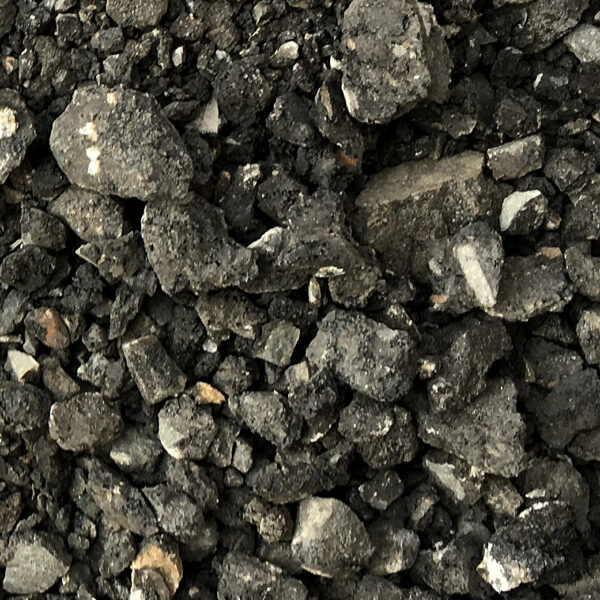
Recycled Asphalt Millings
Recycled asphalt millings can be valuable because they already contain aggregate and aged binder. But the material only becomes reliable when particle size, fines content and oversize fit the intended use.
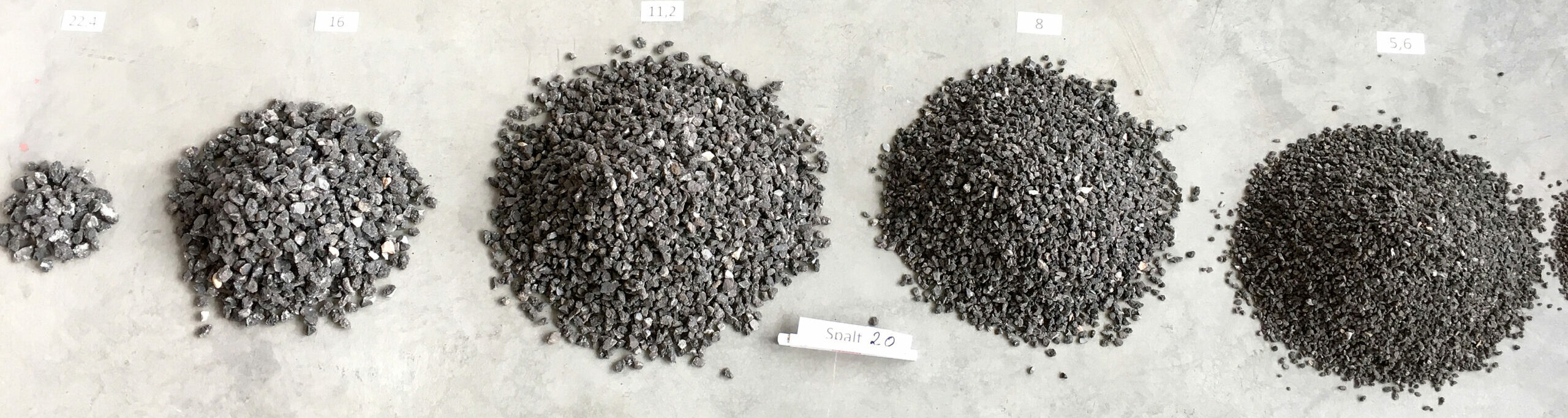
A usable recycled asphalt product needs a consistent top size. Too much oversize slows down screening, blending and downstream handling.
Excessive fines can reduce the value of the coarse fraction and create dust, handling and compaction challenges.
For many recycling applications, preserving coarse particles is more valuable than simply crushing everything aggressively.
Terminology
Asphalt millings and crushed asphalt are closely related, but they are not always identical. Asphalt millings usually refers to reclaimed material directly from milling. Crushed asphalt usually refers to recycled asphalt material that has been processed to a more defined size.
That distinction matters because search intent changes. A user searching for asphalt millings may want a general explanation, cost context or reuse ideas. A user searching for crushed asphalt often wants to know whether the output material is usable, compactable and consistent enough for a specific application.
For Crush + Size, the central point is controlled size reduction. In asphalt recycling, crushing should reduce large pieces without unnecessarily turning valuable coarse material into fines.
Use Cases
Yes, crushed asphalt can be used for driveways. But for a professional recycling operation, the driveway question is one use case inside a larger material-quality conversation.
Crushed asphalt can compact into a stable surface when the material is consistent and installation conditions are suitable.
Recycled asphalt material can support construction and road base applications when gradation and compaction behavior fit.
Consistent fractions are easier to screen, blend, stockpile and prepare for higher-value reuse.
Processing Decision
Asphalt millings do not always need crushing. If the material is already fine and consistent enough for the intended use, screening or direct reuse may be sufficient. Further processing becomes relevant when the feed limits reuse or production efficiency.
The ACR Asphalt Crusher is built for controlled asphalt size reduction with low fines and high coarse particle content.
Controlled Crushing
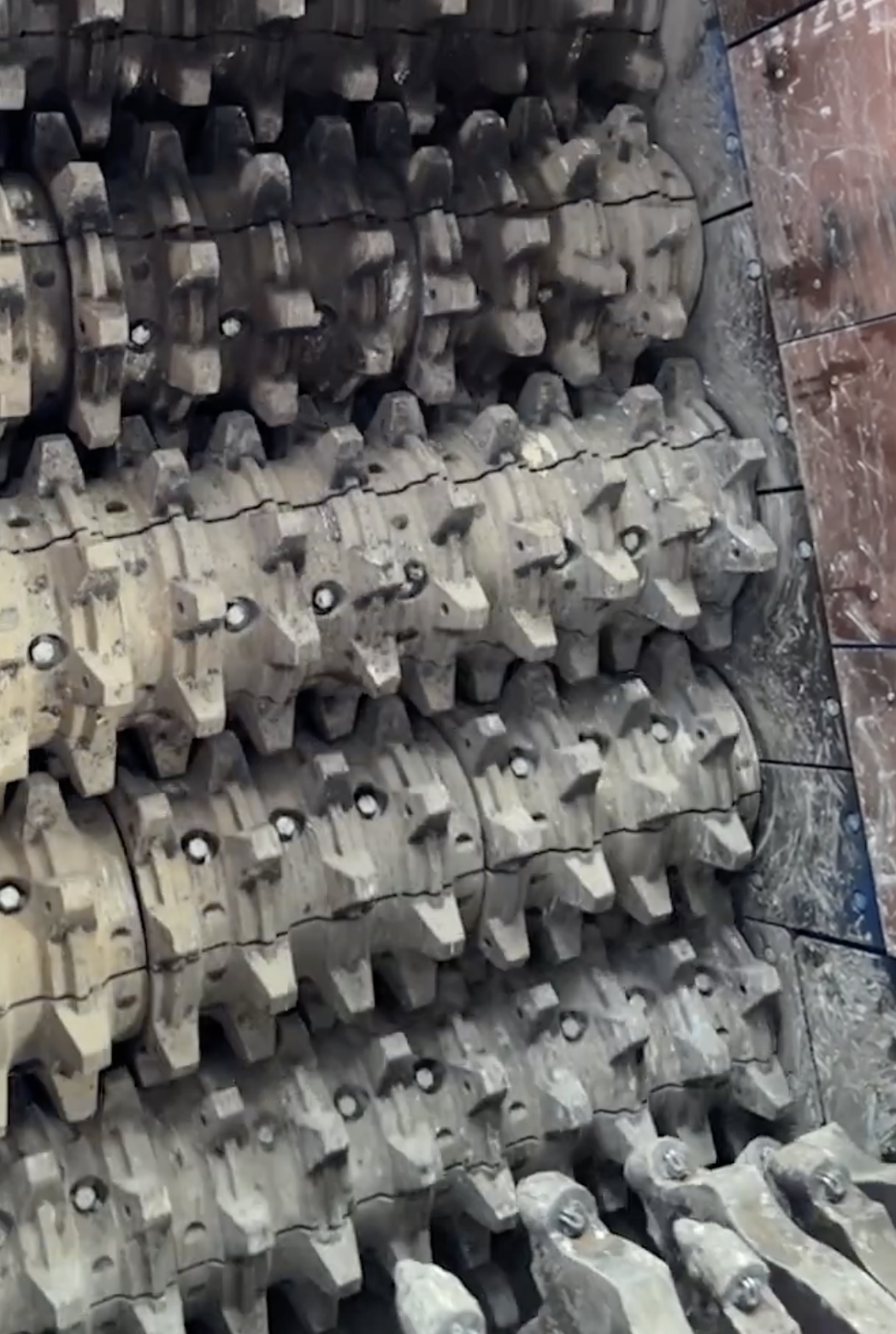
Asphalt behaves differently from hard natural stone. It can be sticky, bitumen-rich and variable. An overly aggressive process may create excessive fines, while an uncontrolled process may leave too much oversize.
The Crush + Size ACR Asphalt Crusher uses slow roller rotation and hydraulic adjustment of the roller gap. This supports gentle crushing, a high coarse particle content and low fines in the final product. Hydraulic overload protection helps when difficult material enters the crushing chamber.
Material Cycle
The strongest asphalt recycling process does not stop at definitions. It connects material intake, controlled size reduction, screening, blending and reuse into one reliable product path.
Selection Guide
Direct reuse or screening may be enough when the particle size already matches the intended application.
Controlled crushing should be evaluated when large chunks limit handling, screening or final material quality.
Focus on top size, coarse fraction, fines content and repeatable output instead of only disposal or cheap fill.
FAQ
They are closely related but not always identical. Asphalt millings are reclaimed material removed during milling. Crushed asphalt usually refers to recycled asphalt material that has been processed or reduced to a more defined size.
They are used in base layers, temporary roads, construction access, shoulder material, recycling plants and, in some cases, driveway applications. The final use depends on particle size, fines content, compaction behavior and material consistency.
Yes, crushed asphalt can be used for driveways, but material quality matters. A consistent particle size, controlled fines content and proper compaction are important for performance.
Additional crushing becomes relevant when the material contains oversized chunks, slabs or inconsistent particle sizes that limit reuse or processing efficiency.
Controlled crushing reduces oversize without applying more crushing force than needed. In the ACR Asphalt Crusher, slow roller rotation and an adjustable roller gap help preserve coarse particles while limiting unnecessary fines.
For large asphalt chunks, slabs and milled asphalt, a dedicated asphalt crusher such as the Crush + Size ACR can be used for controlled size reduction.
Review the ACR Asphalt Crusher or discuss your feed material, target size and recycling process with Crush + Size.