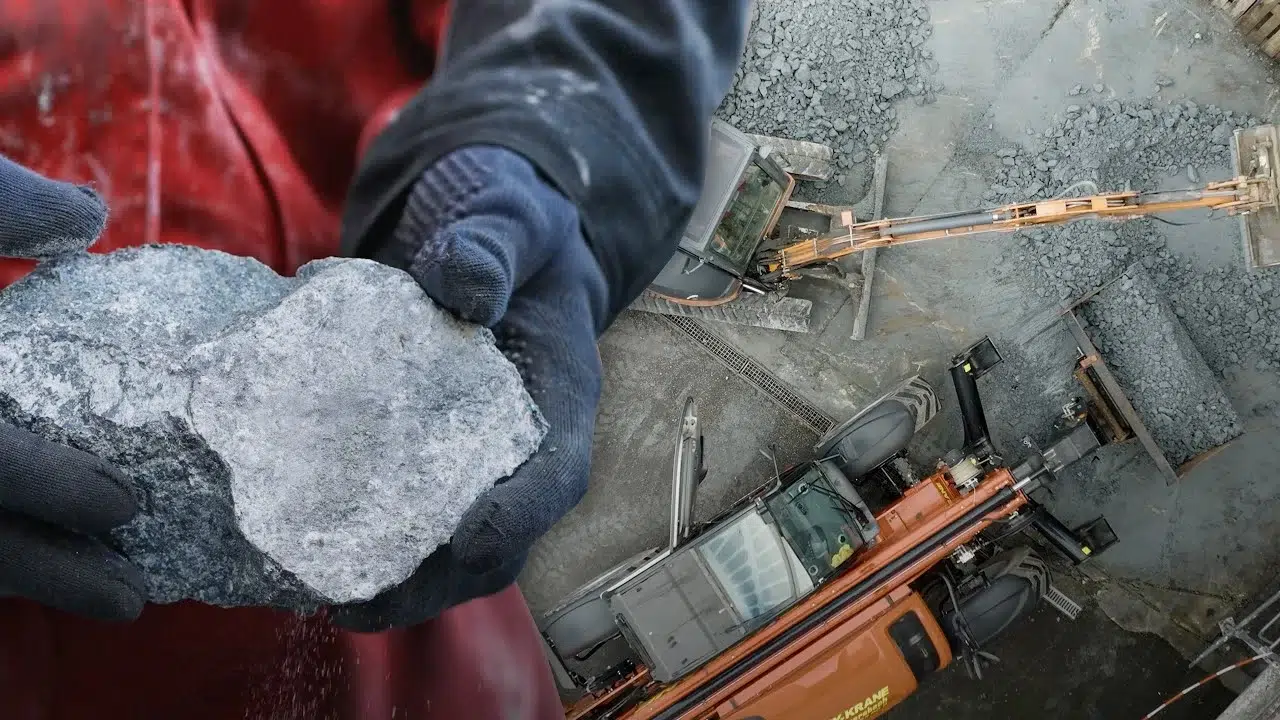
Crush + Size Technology

Mineral processing in mining | Crush + Size
Crush + Size / Crushing technology for mining

Mineral processing
in mining.

Controlled crushing of mineral raw materials.

Roll crushers and sizers for ore, coal and overburden – tailored to your material, target particle size and throughput.

From extraction to downstream processing

Turning extracted material into a defined particle size.

Extraction provides the raw material. Processing prepares it for the next step. The crusher performs a clearly defined task within the process chain.

  1. 01 / EXTRACTION

    Extract

    Mining and handling produce material of different sizes and compositions.

  2. 02 / CRUSHING

    Crush

    Roll crushers or sizers reduce the material to the required particle size.

  3. 03 / CLASSIFICATION & SEPARATION

    Classify & separate

    Screening and other processes separate the material according to process requirements.

  4. 04 / DOWNSTREAM PROCESSING

    Process further

    The defined particle size supports transport, separation or production.

Schematic process sequence: the order and extent of processing depend on the raw material and the plant concept. Crushing and classification may be combined in several stages.

Published application reports

Three materials.
Three different crushing tasks.

Each machine is designed for a specific task. These examples show how feed size, product size and material properties interact.

Magnetite and the CST 771 mobile crushing plant in the published field test▶ Watch the magnetite field test
Ore / Magnetite · Field test

Hard iron ore in secondary crushing

The magnetite test used the CST 771 mobile plant fitted with a toothed roll crushing unit from the DRC series. The aim was a coarse product with a low fines content.

Feed size0–300 mm
Product size0–80 mm
Test throughput
200–300 t/h
Compressive strength
up to 300 MPa
Read the magnetite field test →
Sizer 800 for clay-rich overburden and granite
Overburden / Granite · Project report

Making clay-rich overburden suitable for transport

The Sizer 800 was designed for clay-rich overburden containing hard granite inclusions. The crushing task reduces large lumps to a size suitable for transport.

Feed size1,000 mm
Product size250 mm
Reported throughput
1,000 t/h
Granite compressive strength
up to 300 MPa
View the Sizer 800 project →
DRC 450-15 double roll crusher for hard coal processing
Hard coal · Delivery report

Crushing coal to a defined product size

Three DRC 450-15 crushers were delivered for hard coal processing. The report describes gentle crushing with a high proportion of coarse particles and a low fines content.

Feed size20–80 mm
Product size0–20 mm
Specified throughput
100 t/h
Compressive strength
up to 50 MPa
Read the hard coal application report →

The figures are taken from the linked reports. They describe different tests and projects; the achievable performance in another application is determined from its material and process data.

Crush + Size Sizer 800 for crushing overburden and granite
Sizer 800 from the published project report on overburden and granite.
Primary crushing / Sizer 800

Coarse feed.
Controlled primary crushing.

Primary crushing starts with coarse feed material. When processing overburden, producing a particle size suitable for transport may itself be the key task.

The Sizer 800 described here combines a synchronised drive with a pick system whose tool heads can be installed and removed without welding.

44 tMachine weight
1 × 250 kWDrive power in this project
Crushing technology for high-performance mining →
Consider material and process together

Which crusher suits
your processing task?

The material name alone is not enough to select a crusher. The actual feed material and the product requirements are decisive.

Design parameterWhat it means for the crushing task
Feed size & lump shapeParticle size distribution, maximum lump dimension and lump shape determine the requirements for material intake and the crushing chamber.
Target size & fines contentThe required particle size range, permitted oversize and fines content define the crushing target.
ThroughputThe required capacity in t/h must be considered together with the material feed and the reduction ratio.
Strength & abrasivenessCompressive strength and abrasive wear are different properties. Both influence the design of the machine and its tools.
Moisture & sticky componentsLoam, clay and adhering material place additional demands on the crushing chamber and material flow.
Plant integrationFeeding equipment, downstream conveying, installation space and maintenance access are part of planning the entire crushing stage.

Primary, secondary and tertiary crushing describe the position in the process. The number of stages required depends on the feed size and the desired product.

Roll crushers and sizers

Crushing technology designed
around the result.

Roll crushers reduce material between rotating rolls. Tool geometry, crushing gap and drive are matched to the specific task.

The published applications range from coal to the magnetite test with high compressive strength. They demonstrate why material data and practical tests matter when selecting a crusher.

More about C&S roll crusher technology →
Crush + Size DRC double roll crusher for high-performance mining
DRC double roll crusher for high-performance mining applications.
Explore your application

From an overview
to your specific crushing task.

Processing mineral raw materials in a quarry? Further applications: Limestone and marble · Gypsum.

Frequently asked questions

Mineral processing in mining:
What matters when planning.

What does mineral processing involve?

Mineral processing covers the steps that prepare extracted material for further use. These may include crushing, classification and separation of different components. The processes required depend on the raw material and the desired product.

What is the difference between primary and secondary crushing?

The primary crusher handles the first crushing step for the feed material. A secondary crusher further reduces material that has already been crushed. A tertiary stage may be needed if the previous stages do not achieve the target particle size.

Can roll crushers crush hard iron ore?

Yes, with the appropriate design. In the published magnetite test, the CST 771 with a DRC toothed roll crushing unit processed material with compressive strength up to 300 MPa. Feed material of 0–300 mm was reduced to a product of 0–80 mm. Suitability for another ore must be assessed using its properties.

Why does fines content matter when choosing a crusher?

Fines alter the particle size distribution of the product. Whether they are desirable or should be limited depends on the next process stage. In the published magnetite and hard coal applications, low fines content and a high proportion of coarse particles were important targets.

How is clay-rich overburden with hard inclusions processed?

This mixture requires a design that can handle both adhering components and hard lumps. In the Sizer 800 project, clay-rich overburden with granite inclusions was specified for a transportable product size of 250 mm. The precise solution depends on composition, moisture and feed size.

What information does Crush + Size need for an initial design?

Useful information includes material type and composition, feed size including maximum lump dimension, target product size and throughput. Available data on compressive strength, abrasiveness, moisture and sticky components complete the picture. The feeding arrangement and plant integration should also be described.

Your application / Our crushing technology

Which material
do you need to crush?

Tell us about your crushing task. Together, we will consider the material properties, target particle size and integration into your process.

  • 01Material and composition
  • 02Feed size and maximum lump dimension
  • 03Target product size
  • 04Required throughput in t/h
  • 05Installation conditions and process environment